Noryangjin & Dongjak: Seoul's Fish Market and the River's Quiet South Bank
Korea's biggest fish market, a national cemetery, and a student district where nobody is charging tourist prices. Dongjak-gu is the most useful part of Seoul nobody visits.
EatHub Data Brief
What this guide is built from
This article is connected to EatHub restaurant records, so readers can move from advice to the live map instead of stopping at a generic list.
- Mapped restaurants
- 6
- Neighborhoods
- 동작구
- Awarded spots
- Check per listing
- Food focus
- 한식, 중식
Menu signals: 양념치킨, 생선회, 중식당, 육류,고기요리
Allergy fields present: chicken, eggs, gluten, soy, fish
Dongjak-gu sits on the south bank of the Han River between Yeouido and Gangnam, and almost no visitor itinerary includes it. It should. This is where Seoul's fish arrives, where the country's war dead are buried, and where tens of thousands of students living on very little money have kept the food cheap and honest.
The three reasons to come
- Noryangjin Fisheries Wholesale Market. The largest seafood market in Korea, rebuilt into a modern hall and open 24 hours. The auction floor runs in the small hours; the retail floor runs all day. You buy your fish downstairs, agree a fee, and carry it upstairs where a restaurant slices it and serves it with the sides. It's the cheapest way to eat serious raw fish in Seoul.
- Seoul National Cemetery. A large, quiet, tree-filled site on the riverbank where Korean war dead and former presidents are buried. It's free, respectful, and one of the calmest places in the city — beautiful in cherry blossom season.
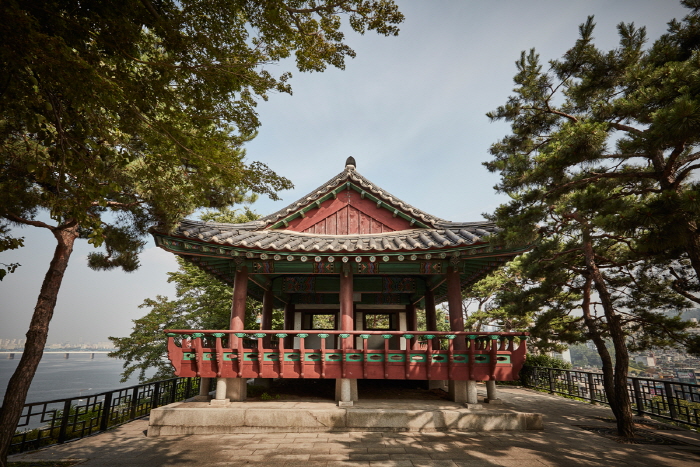
- The river itself. Hyosajeong, a pavilion above the water at Heukseok, gives one of the best free river views in Seoul, looking straight across at Yongsan. The Dongjak Bridge and the riverside path connect it to Banpo.
Add Boramae Park, a large former air force academy turned public park, and Heukseok-dong, the hillside student neighborhood below Chung-Ang University, and you have a full day.
What to eat
Two distinct food cultures overlap here:
Seafood, obviously. Noryangjin's upstairs restaurants do the classic Korean raw-fish meal: sliced white fish with sesame oil and ssamjang, then maeuntang made from the frame. Around the market, the neighborhood restaurants have their own raw fish and steamed-seafood specialists at market prices.
Student food. Heukseok-dong and Sadang keep a dense population of cheap, high-volume restaurants:
- Old-school fried chicken. Dongjak has one of the century-recognized fried chicken shops in Seoul — whole birds, thin batter, no sauce, no branding.
- Grilled pork and beef. Charcoal grill houses priced for students rather than salarymen.
- Jjajangmyeon and jjamppong. The district's Chinese-Korean restaurants are long-established and consistently good.
- Dakdoritang and jeongol. Big shared pots designed to feed four people for the price of one Gangnam main course.
How to do Noryangjin properly
- Go in the evening or very early. The retail floor is liveliest from about 6pm; the auction is around 1–3am.
- Ask the price per kilo before choosing. Prices are negotiable and vary between stalls.
- The upstairs serving fee is separate — usually per person, and it covers the slicing, the banchan, and the maeuntang. Confirm both numbers before you commit.
- Buy from one stall, not several. It's simpler and you'll get a better price.
- If it feels like too much work, the restaurants below do the same fish with none of the negotiation.
Practical tips
- Getting there: Noryangjin Station (Lines 1, 9) connects to the market by a covered footbridge. Dongjak Station (Lines 4, 9) for the cemetery, Heukseok Station (Line 9) for the student district.
- The market is open all night but most upstairs restaurants close around 10pm.
- Seoul National Cemetery closes at 6pm and is a place of mourning — dress and behave accordingly.
- Cherry blossoms here in early April are as good as anywhere in Seoul, with a fraction of the crowd.
Each restaurant below has a video on its EatHub page, which is the quickest way to judge a Noryangjin-area seafood room before you walk in.
Find These Restaurants on EatHub
Trip Planning FAQ
How should I use this Noryangjin & Dongjak: Seoul's Fish Market and the River's Quiet South Bank guide on a trip?
Use the article to narrow your shortlist, then open the linked EatHub map listings to check location, hours, menu context, and nearby areas before you travel.
Do I need a reservation?
For popular Seoul restaurants, award-listed spots, and dinner-time Korean BBQ, booking ahead is safer. If a listing has phone or hours data, confirm before visiting.
Can I use this guide if I have food allergies?
EatHub shows allergy fields when they are available, including chicken, eggs, gluten, soy, fish in this guide. Always confirm ingredients with the restaurant before ordering.
What should I compare before choosing a restaurant?
Compare route fit, budget, menu, and timing. This guide includes signals such as 동작구 and 한식, 중식.