Jeju City: What to Eat Where the Island Actually Begins
Most Jeju trips start and end in Jeju City, and most travelers eat badly there. Dongmun Market, the black pork alley, and the haenyeo kitchens deserve more than a transit stop.
EatHub Data Brief
What this guide is built from
This article is connected to EatHub restaurant records, so readers can move from advice to the live map instead of stopping at a generic list.
- Mapped restaurants
- 6
- Neighborhoods
- 제주시
- Awarded spots
- 1
- Food focus
- 한식
Menu signals: 국수, 해물,생선요리, 한식, 고기요리
Allergy fields present: eggs, gluten, sesame, soy, fish
Jeju is Korea's volcanic island, an hour's flight from Seoul, and the most popular domestic holiday destination in the country. Almost every trip begins at Jeju City on the north coast — and almost every trip treats it as a place to collect a rental car and leave.
Give it an evening. Jeju City has the island's best market, its oldest restaurants, and the food that the island's own people eat rather than the food built for visitors.
What to do in the city
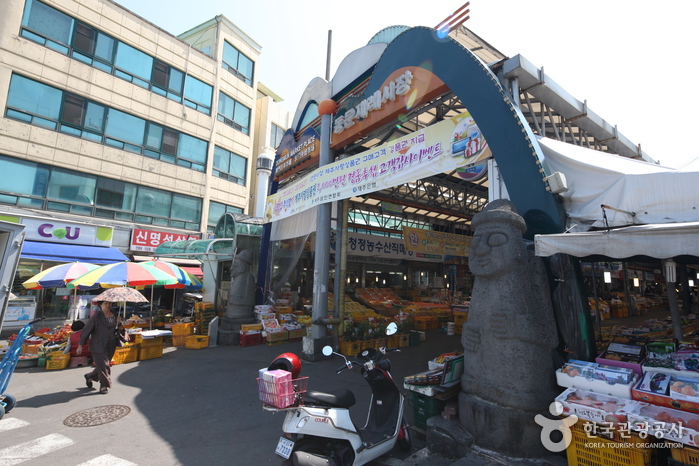
- Dongmun Traditional Market. The island's central market, open into the evening, with an entire section of tangerines, another of dried fish, and a night-market food row. It's the single best introduction to what Jeju grows and catches.
- Yongduam (Dragon Head Rock). A basalt formation on the coast, five minutes from the airport, and a good short walk along the shoreline.
- Hallasan. The dormant volcano at the island's center, and Korea's highest mountain. The Yeongsil and Eorimok trails are the manageable ones; Baengnokdam at the summit is a full day.
- Jeju Folk & Natural History Museum and the old Jeju Mokgwana government office, both in the city center.

What to eat
Jeju's food is genuinely different from the mainland's. The island had little rice, a lot of volcanic soil, and an economy built on diving women and small black pigs. That history is still on the menu:
- Heuk-dwaeji (흑돼지), black pork. Jeju's native pig breed, grilled thick over charcoal and eaten with melgeot — a salty anchovy dipping sauce that mainland Koreans find startling and Jeju people consider mandatory. Jeju City's black pork street is where to do it.
- Haenyeo food. The island's diving women bring up abalone, conch, and sea urchin. Look for jeonbok-juk (abalone porridge), seongge-guk (sea urchin and seaweed soup), and raw conch.
- Galchi (hairtail). Grilled whole or braised with radish — a long silver fish that's a Jeju signature.
- Gogi-guksu (고기국수). Wheat noodles in pork bone broth topped with sliced pork belly. It's the island's everyday lunch and it exists almost nowhere else in Korea.
- Tangerines and everything made from them, from December through March.
Practical tips
- Getting there: Jeju International Airport is 15 minutes from the city center. Buses 315/316 and the airport limousine both run into town.
- You don't need a car for Jeju City itself — only for the rest of the island.
- Seafood is seasonal here in a way it isn't on the mainland. Ask what's good today rather than ordering from memory.
- Melgeot is not optional. Try the black pork with it before deciding.
- Dongmun Market's night food row runs until around 10pm; the produce stalls close much earlier.
Each restaurant below has a video on its EatHub page. Book your first night in the city, eat properly, and pick up the car in the morning.
Find These Restaurants on EatHub
Trip Planning FAQ
How should I use this Jeju City: What to Eat Where the Island Actually Begins guide on a trip?
Use the article to narrow your shortlist, then open the linked EatHub map listings to check location, hours, menu context, and nearby areas before you travel.
Do I need a reservation?
For popular Seoul restaurants, award-listed spots, and dinner-time Korean BBQ, booking ahead is safer. If a listing has phone or hours data, confirm before visiting.
How do Michelin and Blue Ribbon signals help me choose?
Michelin is useful for internationally recognized dining and Bib Gourmand value picks, while Blue Ribbon can surface strong local recognition. EatHub combines those signals with map context so the choice fits your route.
Can I use this guide if I have food allergies?
EatHub shows allergy fields when they are available, including eggs, gluten, sesame, soy, fish in this guide. Always confirm ingredients with the restaurant before ordering.