Gwangmyeong: A Gold Mine Turned Cave Park, and One of Seoul's Biggest Markets
Just past Seoul's southwest edge, a colonial-era gold mine has become Korea's most unusual underground attraction — with a wine cave inside — and Gwangmyeong Traditional Market is a street-food tour in itself.
EatHub Data Brief
What this guide is built from
This article is connected to EatHub restaurant records, so readers can move from advice to the live map instead of stopping at a generic list.
- Mapped restaurants
- 6
- Neighborhoods
- 광명시
- Awarded spots
- Check per listing
- Food focus
- 한식, 카페/베이커리
Menu signals: 두부, 돼지고기구이, 떡볶이, 꽈배기, 호떡
Allergy fields present: sesame, shellfish, soy, pork, eggs
Gwangmyeong (광명) is a short hop from Seoul's southwest corner. Most visitors only pass through it on the KTX. Stop instead: it has one of the most unusual attractions in the capital region and a traditional market that makes an excellent street-food crawl.
Gwangmyeong Cave (광명동굴)
The cave was a gold, silver and copper mine, opened in 1912 during the Japanese colonial period and worked until 1972. For years afterwards it was used to store salted fermented shrimp (saeujeot). The city reopened it in 2011 as a cave park, and it has become one of Gyeonggi's most-visited attractions.
Inside, expect:
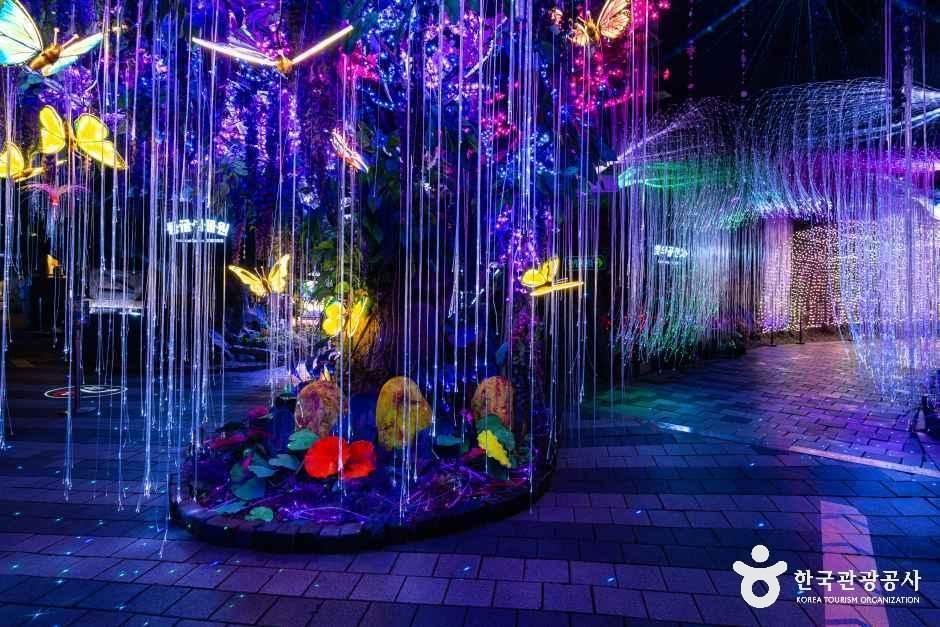
- Lit tunnels and a light-art gallery along the old mine galleries.
- A "golden road" and exhibits on the mining history and the miners who worked here.
- An underground waterfall and pool.
- A wine cave that stocks and sells Korean wines from vineyards around the country. It's a fun, unexpected tasting stop.
It stays cool (around 12°C all year), so bring a layer even in August.

Gwangmyeong Traditional Market
Near Gwangmyeong Sageori Station, this is one of the largest traditional markets in the Seoul area. It's covered and busy, and it's good for snacks:
- Adeulnaemi Tteokbokki — spicy rice cakes.
- Happiness Chapssal Kkwabaegi & Hotteok — twisted glutinous-rice doughnuts and syrup-filled pancakes.
- Yumyeonghwan Dakgangjeong — sweet-crispy fried chicken bites to take away.
- Traditional hangwa — Korean confections made with rice, honey and grain puffs. A good gift to take home.
Sit-down meals
- Dalbongine Dubu — homemade tofu dishes, featured on the Foodieland channel (the hero video above).
- Dwaejijip (Soha-dong) — grilled pork, near the cave and KTX side of the city.
How to plan the day
Start at the cave in the morning. Bus 17 or a short taxi from Gwangmyeong Station (KTX) takes 15–20 minutes. Come back into the city for lunch, then spend the afternoon eating through the market near Gwangmyeong Sageori Station (Line 7).
Practical tips
- Getting there: KTX or Seoul Subway Line 1 (Gwangmyeong shuttle) to Gwangmyeong Station, or Line 7 to Gwangmyeong Sageori for the market.
- The cave has an admission fee and is closed on some weekdays. Check current hours before you go.
- Wear shoes with grip. Some cave floors are damp.
- Allergies: kkwabaegi and hotteok contain wheat and sometimes nuts, and dakgangjeong glaze contains soy.
Every food stop below has a video on its EatHub page. It's the easiest way to find the right stall in a busy market.
Find These Restaurants on EatHub
Trip Planning FAQ
How should I use this Gwangmyeong: A Gold Mine Turned Cave Park, and One of Seoul's Biggest Markets guide on a trip?
Use the article to narrow your shortlist, then open the linked EatHub map listings to check location, hours, menu context, and nearby areas before you travel.
Do I need a reservation?
For popular Seoul restaurants, award-listed spots, and dinner-time Korean BBQ, booking ahead is safer. If a listing has phone or hours data, confirm before visiting.
Can I use this guide if I have food allergies?
EatHub shows allergy fields when they are available, including sesame, shellfish, soy, pork, eggs in this guide. Always confirm ingredients with the restaurant before ordering.
What should I compare before choosing a restaurant?
Compare route fit, budget, menu, and timing. This guide includes signals such as 광명시 and 한식, 카페/베이커리.