Gangseo: Seoul's Botanic Park, the Old Airport, and Where to Eat Before a Flight
Gimpo Airport handles Korea's domestic flights and short hops to Tokyo and Osaka. The district around it has a huge free botanic park and a food scene worth arriving early for.
EatHub Data Brief
What this guide is built from
This article is connected to EatHub restaurant records, so readers can move from advice to the live map instead of stopping at a generic list.
- Mapped restaurants
- 6
- Neighborhoods
- 강서구
- Awarded spots
- 1
- Food focus
- 한식
Menu signals: 막국수, 생선회, 한우소곱창, 한우모듬구이, 곱해장국, 포장마차
Allergy fields present: buckwheat, eggs, gluten, sesame, soy
Most travelers pass through Gangseo-gu without noticing. It's where Gimpo Airport is — Seoul's second airport, which handles almost all domestic flights and the short international hops to Tokyo Haneda, Osaka, Taipei and Shanghai. If you're flying to Jeju or Busan, you're coming here.
Which makes it worth knowing that the district around the airport has one of the best free attractions in Seoul and a genuinely good place to eat.
What to see
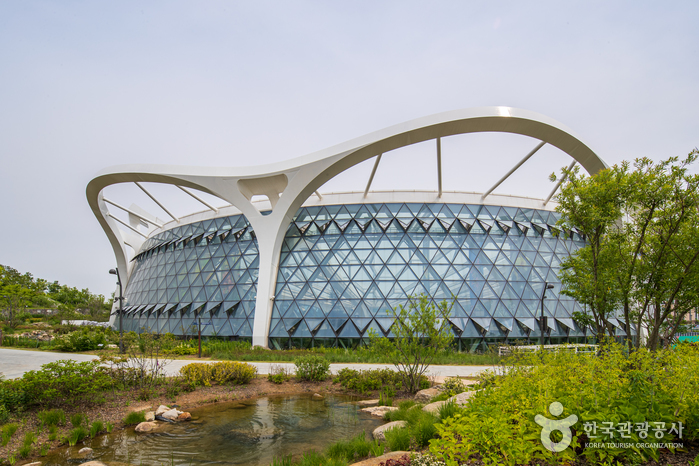
- Seoul Botanic Park. A 50-hectare park in Magok combining wetland, woodland, and a vast glass conservatory of tropical and Mediterranean plants. The outdoor park is free; the greenhouse costs a small fee. It's twenty minutes from the airport and one of the best rainy-day options in the city.
- Gaehwasan. A low hill on the district's western edge with one of Seoul's great sunset views over the Han River estuary and, on a clear day, toward the North Korean border.
- Heo Jun Museum. A museum to the Joseon court physician who wrote the Dongui Bogam, the foundational text of Korean medicine, built where he lived.
- Gyeomjae Jeongseon Museum, dedicated to the great eighteenth-century landscape painter, near Gangseo's old riverside.
What to eat
Gangseo's food is shaped by two populations: airport and office workers in Magok and Balsan, and a large residential district that has been here far longer.
- Makguksu and cold noodles. Gangseo has one of the century-recognized buckwheat noodle houses in Seoul — a plain room that has been making the same bowl for generations.
- Gopchang. Grilled beef and pork intestine, the classic Korean drinking food, with a well-known cluster around Balsan.
- Mulhoe and raw fish. Cold spicy raw-fish soup — an east-coast dish — turns up here surprisingly well, along with a solid hoe scene.
- Pojangmacha. Indoor tented bars around the older neighborhoods, open late.
- Baekban and country set meals, aimed at the residential population rather than visitors.
The airport angle
If you have a few hours before a Gimpo flight, the practical version is: bag storage at the airport, one subway stop (Line 9 or Line 5) into Magok, an hour in the Botanic Park, lunch nearby, and back. The airport itself connects to central Seoul in about 30 minutes on Line 9's express service, and to Incheon Airport directly on the AREX line.
Practical tips
- Getting there: Gimpo International Airport Station (Lines 5, 9, AREX, Gimpo Goldline); Magongnaru Station (Line 9) for the Botanic Park.
- The Botanic Park greenhouse closes Mondays; the outdoor park stays open.
- Line 9 express skips most stations and is much faster into the center — check the platform indicator.
- Gaehwasan at sunset needs about 40 minutes of walking up from Gaehwasan Station.
- Domestic flights from Gimpo ask for 40 minutes before departure, not the usual two hours.
Each restaurant below has a video on its EatHub page, so you can judge a place before committing an hour of a layover to it.
Find These Restaurants on EatHub
Trip Planning FAQ
How should I use this Gangseo: Seoul's Botanic Park, the Old Airport, and Where to Eat Before a Flight guide on a trip?
Use the article to narrow your shortlist, then open the linked EatHub map listings to check location, hours, menu context, and nearby areas before you travel.
Do I need a reservation?
For popular Seoul restaurants, award-listed spots, and dinner-time Korean BBQ, booking ahead is safer. If a listing has phone or hours data, confirm before visiting.
How do Michelin and Blue Ribbon signals help me choose?
Michelin is useful for internationally recognized dining and Bib Gourmand value picks, while Blue Ribbon can surface strong local recognition. EatHub combines those signals with map context so the choice fits your route.
Can I use this guide if I have food allergies?
EatHub shows allergy fields when they are available, including buckwheat, eggs, gluten, sesame, soy in this guide. Always confirm ingredients with the restaurant before ordering.