Eunpyeong: A Hanok Village Under a Mountain, Thirty Minutes From Downtown
Northwest Seoul has a modern hanok village, a thousand-year-old temple, and the best trailheads into Bukhansan — with almost none of the crowds of Bukchon.

EatHub Data Brief
What this guide is built from
This article is connected to EatHub restaurant records, so readers can move from advice to the live map instead of stopping at a generic list.
- Mapped restaurants
- 6
- Neighborhoods
- 은평구
- Awarded spots
- Check per listing
- Food focus
- 한식, 중식, 일식
Menu signals: 가마솥 가래떡볶이, 돼지고기구이, 김치말이국수, 오돌뼈복음밥, 청국장, 중식당, 돼지고기
Allergy fields present: eggs, fish, gluten, sesame, shellfish
If Bukchon's hanok lanes felt too crowded, Eunpyeong-gu is the answer. In the far northwest of Seoul, where the city runs into the granite wall of Bukhansan, there's a hanok village built in the 2010s — real houses that people live in, laid out against the mountain — and a temple that has been in the same valley for a thousand years.
It's about thirty minutes from Gwanghwamun on Line 3, and on a weekday you may have the whole thing to yourself.
What to see
- Eunpyeong Hanok Village. Around 150 tile-roofed houses on the slope below Bukhansan's peaks. It's a residential neighborhood, not a museum — the photographs are of the ridgeline behind the roofs, and the correct way to visit is quietly.
- Jingwansa Temple. Founded in 1010 and one of the four great temples that historically guarded Seoul. It sits in a wooded valley at the end of the village, runs a well-known temple-stay, and serves temple food (sachal eumsik) that is worth planning a day around. Free to enter.
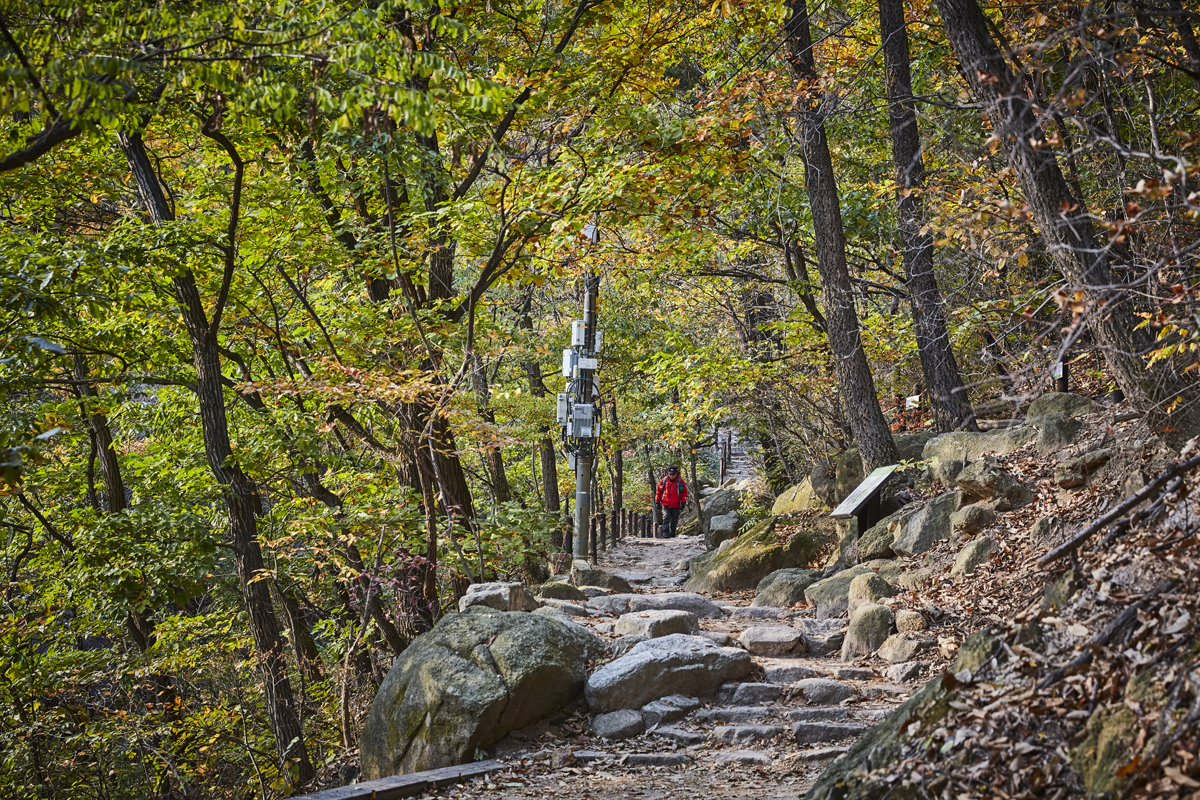
- Bukhansan National Park. Eunpyeong has some of the gentlest entrances to the park. The Bukhansan Dulle-gil is a low circuit trail that rings the mountain without any summit climbing — flat enough for anyone, and a genuinely beautiful half-day.
- Savina Museum of Contemporary Art, relocated to Jingwan-dong, is a quiet modern gallery on the way in.
What to eat
Eunpyeong's food comes from two sources: the mountain, and one of Seoul's densest concentrations of ordinary, long-running neighborhood restaurants along Yeonsinnae and Bulgwang.
- Temple food. Jingwansa's cuisine — no meat, no garlic, no onion — is the opposite of everything else in this guide and completely worth trying once. Book ahead.
- Tteokbokki and bunsik. Yeonsinnae's Munhwa Street has been feeding students for decades and the snack shops here are the real thing.
- Grilled pork. Eunpyeong's charcoal grills are priced for residents, not visitors.
- Mandu. Old dumpling shops, steamed and pan-fried, some running since the neighborhood was built.
- Jjajangmyeon and jjamppong. A long-established Chinese-Korean scene along Bulgwang-ro.
- Sundubu and mountain food at the restaurants clustered near the park entrances — tofu, acorn jelly, and pajeon with makgeolli after a walk.
How to plan the day
The natural order: Line 3 to Gupabal, bus up to the hanok village, walk through it to Jingwansa in the morning light, then either a Dulle-gil section or straight back down for lunch. Eat near the park entrance if you've hiked, or head back to Yeonsinnae if you want the neighborhood restaurants.
Practical tips
- Getting there: Gupabal Station (Line 3), then bus 7211 or 704 to the village; Yeonsinnae Station (Lines 3, 6) for the restaurant streets.
- The hanok village is where people live. No drones, no walking into courtyards.
- Jingwansa's temple food requires a reservation and is served at set times.
- Autumn is the season here — the Bukhansan ridgeline behind the hanok roofs in late October is one of the best views in the city.
- Buses up the hill are infrequent. Check the return time before you settle in.
Each restaurant below has a video on its EatHub page, which is the fastest way to size up a neighborhood room before the walk back down.
Find These Restaurants on EatHub
Trip Planning FAQ
How should I use this Eunpyeong: A Hanok Village Under a Mountain, Thirty Minutes From Downtown guide on a trip?
Use the article to narrow your shortlist, then open the linked EatHub map listings to check location, hours, menu context, and nearby areas before you travel.
Do I need a reservation?
For popular Seoul restaurants, award-listed spots, and dinner-time Korean BBQ, booking ahead is safer. If a listing has phone or hours data, confirm before visiting.
Can I use this guide if I have food allergies?
EatHub shows allergy fields when they are available, including eggs, fish, gluten, sesame, shellfish in this guide. Always confirm ingredients with the restaurant before ordering.
What should I compare before choosing a restaurant?
Compare route fit, budget, menu, and timing. This guide includes signals such as 은평구 and 한식, 중식, 일식.