Choryang & Busan Station: The Hillside Stairs, the Chinatown, and the City's Best Jjajangmyeon
Step off the KTX in Busan and you're already there. Dong-gu has the refugee hillside neighborhoods, Korea's other Chinatown, and a food street most visitors walk straight past.
EatHub Data Brief
What this guide is built from
This article is connected to EatHub restaurant records, so readers can move from advice to the live map instead of stopping at a generic list.
- Mapped restaurants
- 6
- Neighborhoods
- 동구
- Awarded spots
- Check per listing
- Food focus
- 중식, 일식, 한식
Menu signals: 중식당, 일식당, 돼지고기, 종합분식
Allergy fields present: gluten, pork, shellfish, soy, eggs
Everyone arrives in Busan at the same place and almost nobody stops there. Busan Station sits in Dong-gu, and the neighborhood immediately around it — Choryang — is one of the most interesting parts of the city, layered with the history of everyone who has ever arrived here by boat or by train.
If your KTX gets in at noon, don't take the subway straight to Haeundae. Spend three hours here first.
What to see
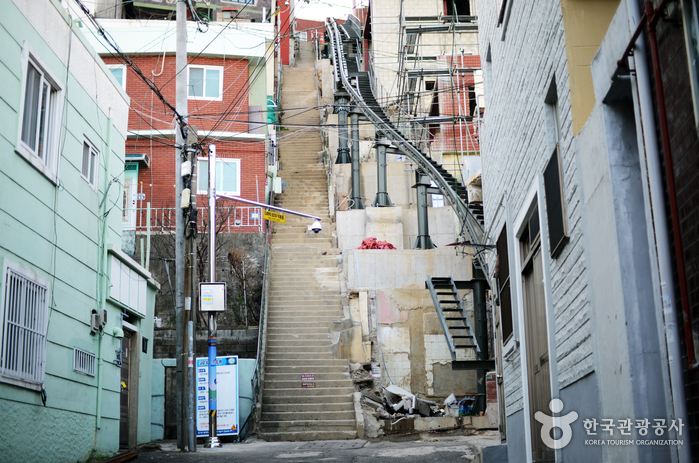
- The 168 Stairs. A near-vertical staircase climbing the hillside behind the station, built for the refugees who put up houses on the slope during the Korean War because there was nowhere flat left. There's a small monorail beside it now if your legs object. From the top, the whole port is below you.
- Ibagu-gil ("Story Road"). The signposted walking route through those hillside neighborhoods, linking the stairs, old houses, small museums, and viewpoints. Ibagu is the local dialect word for "story."
- Busan Chinatown. Directly opposite the station — a small, working Chinese quarter that grew from the Qing consulate established in the 1880s, later shared with the Russian sailors' quarter next door. It's grittier and less polished than Incheon's, and the food is the point.
- Sanbok Road. The road that traverses the mid-slope of the hills, with the bus route that gives you the best cheap city tour in Busan.
What to eat
Dong-gu's food is the food of arrivals: Chinese-Korean, refugee-era Korean, and port-worker cooking.
- Jjajangmyeon and jjamppong. Busan's Chinatown restaurants are the main event, and several have been in the same family for generations. Busan's jjamppong is spicier and more seafood-heavy than Seoul's.
- Grilled pork. The hillside neighborhoods run on charcoal grills and cheap soju.
- Hoe and seafood. Raw fish and steamed shellfish, priced for locals rather than beachgoers.
- Bunsik. Fish cake, tteokbokki and gimbap — Busan's fish cake (eomuk) is a regional specialty and the shops here are the everyday kind, not the department-store kind.
- Dwaeji-gukbap. The pork-bone rice soup that defines Busan eating. There are good bowls of it within five minutes of the station.
How to fit it around a train
A workable three hours: leave your bag in a station locker, cross to Chinatown and eat, walk up Ibagu-gil, take the monorail or the stairs back down, and get the subway onward. If you have a whole day, add the Sanbok Road bus and stay for dinner — this is a much better-value evening than the beach districts.
Practical tips
- Getting there: Busan Station (Line 1, KTX). Everything in this guide is within a 20-minute walk.
- The hillside is steep and residential. The monorail is free or nearly so; use it going up.
- Chinatown is small. Don't expect Incheon's scale — expect three or four excellent restaurants.
- Go up Ibagu-gil in the late afternoon for the light over the port.
- Station lockers fill on weekends. Arrive with a backup plan for luggage.
Each restaurant below has a video on its EatHub page, which helps a lot when a row of Chinatown restaurants all look the same from the street.
Find These Restaurants on EatHub
Trip Planning FAQ
How should I use this Choryang & Busan Station: The Hillside Stairs, the Chinatown, and the City's Best Jjajangmyeon guide on a trip?
Use the article to narrow your shortlist, then open the linked EatHub map listings to check location, hours, menu context, and nearby areas before you travel.
Do I need a reservation?
For popular Seoul restaurants, award-listed spots, and dinner-time Korean BBQ, booking ahead is safer. If a listing has phone or hours data, confirm before visiting.
Can I use this guide if I have food allergies?
EatHub shows allergy fields when they are available, including gluten, pork, shellfish, soy, eggs in this guide. Always confirm ingredients with the restaurant before ordering.
What should I compare before choosing a restaurant?
Compare route fit, budget, menu, and timing. This guide includes signals such as 동구 and 중식, 일식, 한식.